Description

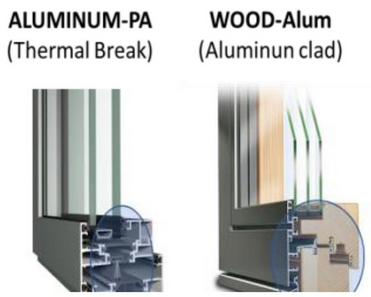
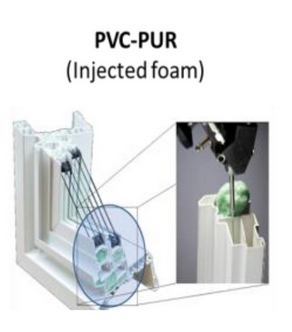
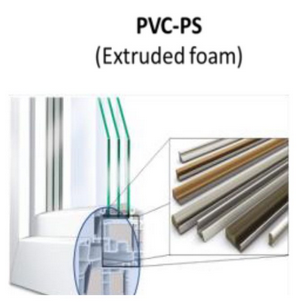
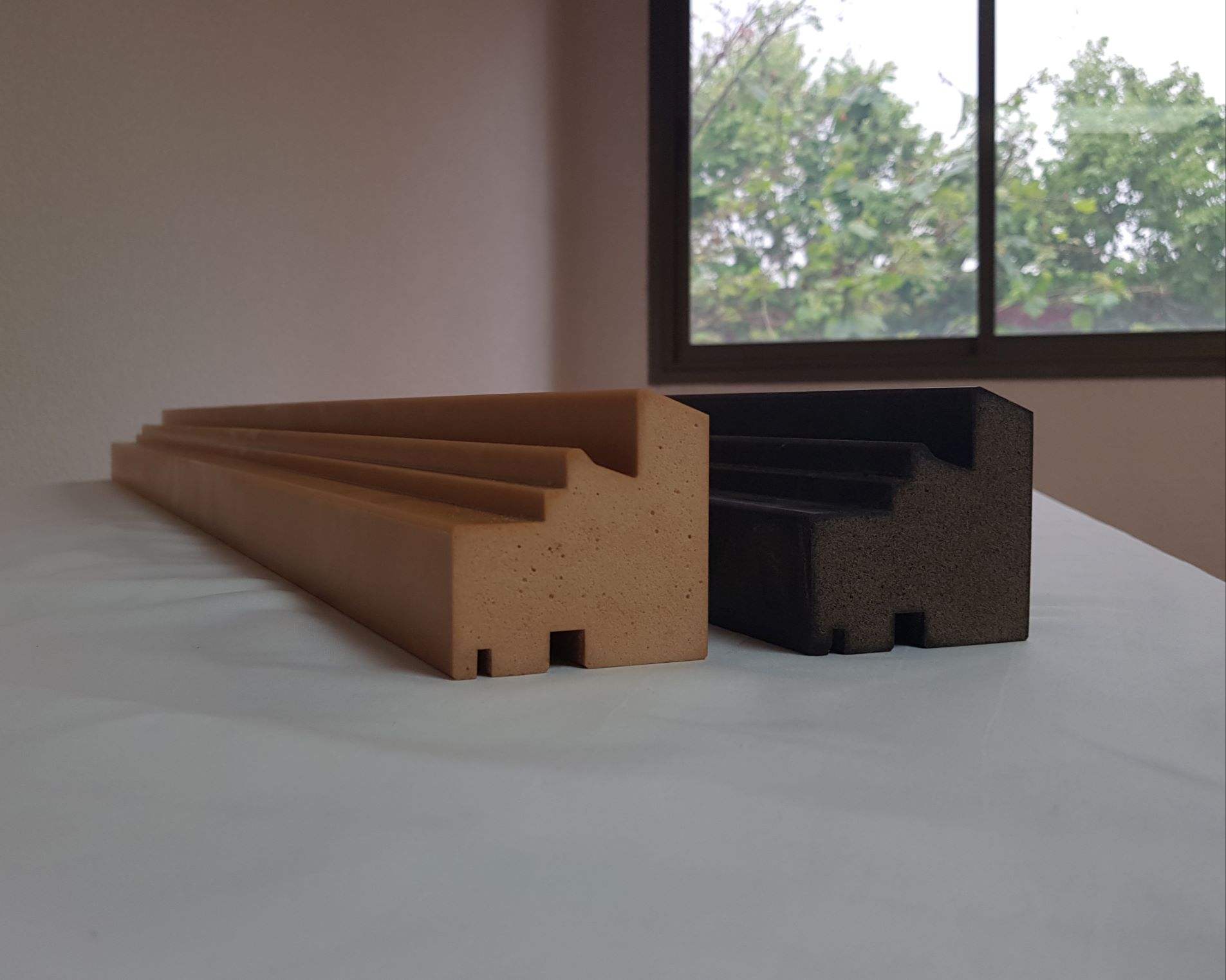
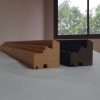
KLIMA-PUR® is a high-performance window system made of bioPolyurethane (BioPUR), designed for energy-efficient and sustainable construction. The material combines outstanding thermal insulation (Uf ≤ 0.8 W/m²K) with excellent acoustic damping and high dimensional stability, outperforming traditional PVC, aluminium, and timber frames.

Its dense microcellular structure and low thermal conductivity result in superior envelope performance and long-term durability (30–40 years), while maintaining a lightweight design. KLIMA-PUR® profiles are fully recyclable, enabling circular manufacturing and reducing embodied carbon compared to fossil-based alternatives.

Product development

To develop the optimal bio-based polyurethane (bioPUR) foam and window frame, the Design of Experiments (DOE) is structured to optimize key performance metrics, including thermal conductivity, density, fire resistance, and processability.

The five formulations were assessed based on considerations such as polyol compatibility with other biobased polyols, average functionality of the polyol phase, which represents the average number of reactive sites per molecule and influences crosslinking density, viscosity, bio-based content, and ease of processing.

Tests

Free Foaming Test (Open Mould)

Plate Moulding Test (Closed Mould)

Hardness-temperature resistance evaluation

Thermal Conductivity Tests

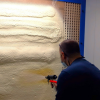
Fire Resistance Test

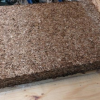
Integration of Recycled Filler

Product safety

KLIMA-PUR® profiles are made of bioPolyurethane (BioPUR) material free from hazardous substances such as foaming agents, plasticizers, or heavy metals. The product is manufactured using aromatic isocyanates and renewable polyols, resulting in a low-VOC formulation that ensures safe indoor air quality and compliance with REACH and RoHS regulations.

During handling and installation, no particular hazards are expected under normal conditions. Standard personal protective equipment (gloves and safety glasses) is recommended when cutting or machining the profiles. In case of fire, carbon monoxide (CO) and carbon dioxide (CO₂) may be released as with any organic polymer. Firefighting measures should use foam, CO₂, or dry chemical extinguishers.

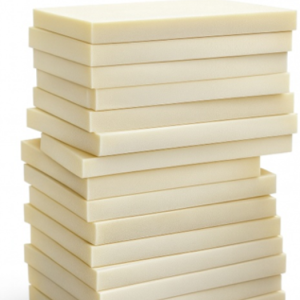
Waste and off-cuts can be mechanically recycled or chemically reprocessed into new BioPUR components, contributing to circularity and minimizing landfill disposal.
Additional information

Factsheets

https://bio4eeb-eu-west-3-bucket-1.s3.eu-west-3.amazonaws.com/Factsheets/technical_datasheet_PUR_wimdow_product.pdf

Applications

Passive-House and nZEB buildings in residential and tertiary sectors
Retrofit projects aiming to reduce heating and cooling demand.
New constructions requiring lightweight, highly insulating frames.
Façade systems and curtain-wall modules using prefabricated or hybrid envelopes

Dimensions

69×70 mm (WxH)

Density

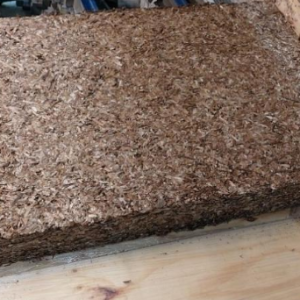
450-500 Kg/m3

Content of biobased

60-70% (considering mass balance isocyanate)

Content of recycled material

Up to 15%

Tensile properties

Elasticity modulus 188 Mpa
Tensile Resistance 4.61 MPa
Deformation 3.1 %
Stress at break 4.61 MPa
Elongation at break 3.1 %

Impact resistance

0.987 kJ/m2
0.693 kJ/m2*

* Obtained value after accelerated aging tests for one month according to UNE-EN 12608-1.

Thermal Properties

Thermal conductivity 0.04919 W/mK (25 ºC)
Thermal resistance 0.3391 m2K/W (25 ºC)
Specific Heat Capacity 1.452 J/g·K (20 ºC)

Calorimetric cone test

Self-ignition Temp. 451ºC

Reaction to fire of the product as is placed on the market

Self-extinguishing

Flammability

Vertical – V0 Class
Horizontal – HB

Heat reversion

Max: 0.13%
Min 0.08 %

Heat behaviour

No significant changes in profile section

Sound absorption

–10 dB

Air permeability

Class 4 – CE marking window testing (window 2-leaf)
Class 4 – CE marking window testing (balcony door 1-leaf)
Class 4 – CE marking window testing (balcony door 2-leaf)

Water tightness

Class E750 – CE marking window testing (window 2-leaf)
Class E1200 – CE marking window testing (balcony door 1-leaf)
Class 0A – CE marking window testing (balcony door 2-leaf)

Wind load resistance

Class C3 – CE marking window testing (window 2-leaf)
Class C5 – CE marking window testing (balcony door 1-leaf)
Class C1 / A2 – CE marking window testing (balcony door 2-leaf)

Acoustic Damping

40(-2;-6) dB – CE marking window testing (window 2-leaf)

Thermal Transmittance

1.1 W/m2K – CE marking window testing (window 2-leaf)
1.1 W/m2K – CE marking window testing (balcony door 1-leaf)
1.1 W/m2K – CE marking window testing (balcony door 2-leaf)

Static Torsion Resistance

Class C4 (350N) – CE marking window testing (balcony door 1-leaf)

Burglar resitance

RC2 Grade – CE marking window testing (balcony door 1-leaf)

Scroll to Top

Select at least 2 products
to compare